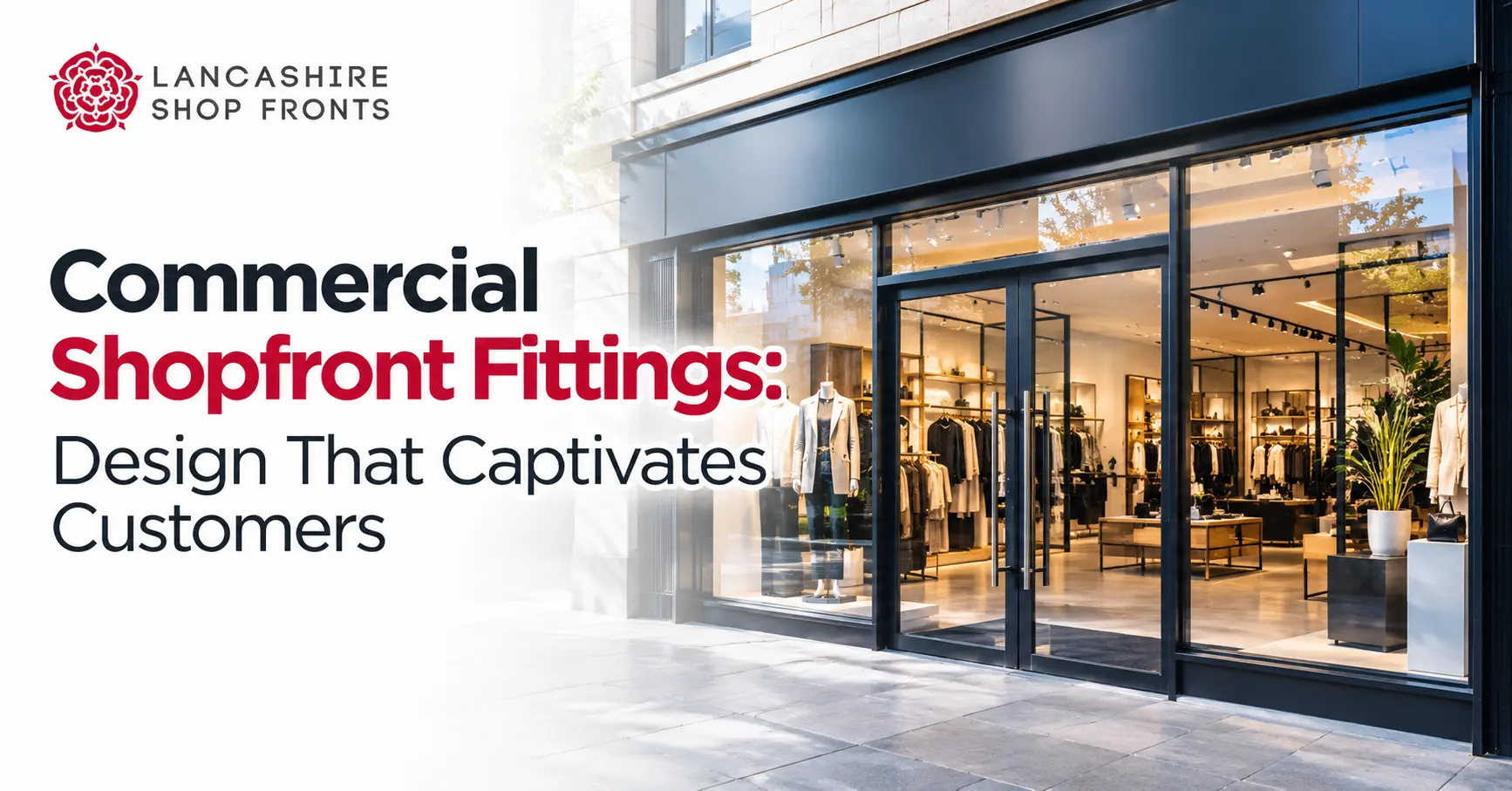
Many customers already form an opinion regarding the business before they even enter the building. This is because the shopfront is the first thing that a customer sees; commercial shopfronts design and state of upkeep have a direct impact on whether or not the place seems welcoming, professional and worth visiting. This explains the significance of the selection of the commercial shopfront fittings.
The design of the shopfront does not just involve framing the entrance. Rather, it can assist in creating a neat look, as well as ensuring that the premises function well for the business. In the case of commercial shopfront fittings in Lancashire, there is also a need to consider the premises, locality, and customer behaviour.
Key Features of Commercial Shopfront Fittings
To achieve an effective commercial shopfront fitting, three core components are required. If one component fails, the overall appearance of the shopfront suffers. The components include the following:
- Glazing: Using big glass panels allows natural lights in the shop and displays the products being sold. Toughened glass and fire-rated glass add security and durability to the shop.
- Frames: Aluminium frames are lightweight, durable and require less maintenance and upkeep, which makes them preferable in busy urban areas.
- Entrance doors: Both the door and door fittings such as hinges, handles and closers are utilised with entrance doors. The entrance doors should either be automatic or low-threshold type.
Choosing Shop Front Fitting in Lancashire
Every place has its own personality. A bustling city, a unit in a shopping park, and a busy street in a city centre will require different approaches. Therefore, the selection of commercial shop fittings must begin with understanding the building’s needs itself.
Before choosing commercial shopfront fittings in Lancashire property, take a look at several local characteristics:
Weather: In Lancashire, you can expect a lot of rain and wind, so the fittings have to be waterproof and reliable.
Foot traffic: A shop located in a busy street will need a bright and attractive front, while a quieter street may allow a warmer overall look.
Planning regulations: Both conservation areas and old buildings may have restrictions as for materials, colours, and signage used.
Neighbouring buildings: A front that fits in well with the building will feel appropriate, while a front that stands out will evoke different feelings.
Design That Attracts Customers
A shopfront has only a few moments to grab someone’s attention. The right design helps customers to recognise the business and understand what it sells. Good design of a shopfront involves some key components:
- Visible and appealing glazing: Large panels of glass make space appear bright and inviting. Through clear glazing, a customer can see various goods and items displayed in the store.
- Clearly marked entrance: One can easily spot the entrance from the street. A doorway placed in the right spot, built with the right materials, will enable people to understand where they can enter without hindering the overall appearance of the shopfront.
- Design should correspond to the nature of the brand: The shopfront should be designed in accordance with the character of the establishment. For example, a modern design can fit well in an auto showroom, while an office should possess a more traditional appearance.
- Suitable commercial doors: The choice of door should complement the shopfront while also meeting the practical needs of the business. Aluminium doors, glass entrance doors, sliding doors or bifold doors can offer different benefits depending on the available space, level of foot traffic and the type of business.
- Design that reflects the business: The look of a business’s shopfront ought to reflect its nature. Contemporary shopfronts are ideal for showrooms or retail outlets, but sophisticated designs might work better for offices or other professional services.
- A balanced use of materials: The materials used in the shopfront such as glass, aluminium frames or other fittings, should complement each other instead of competing for attention. The proper combination can provide commercial shopfronts with an excellent, stylish appearance.
Why Professional Installation Of Commercial Shopfront Fittings Matters?
Having a properly designed and good quality product is important, but its installation is equally important. Improperly installed doors, frames or glazing can affect how the shopfront looks and how it will work. Professional installation helps to:
Proper fitting: Correct measuring will allow you to fit your door, frame or glazing in the space neatly.
Proper operation: The door should open and close easily and be able to lock.
Secure fitting: Both the glazing and frames must be installed in a way that will provide stability and protection.
Neat finish: If everything is properly aligned and installed, then the shopfront will look neat and attractive.
Final thought: A shopfront is one of the things customers see. From windows and frames to doors and safety features, every part plays a role in how it looks, how safe it is and how well it works.
For businesses thinking about shopfront fittings in Lancashire, the main goal should be to create a frontage that looks good, functions well and matches the building needs. With the design and expert installation, commercial shopfronts can make a great first impression and offer a practical entrance for daily use.
FAQs:
1. Why Are Commercial Shopfronts Important For A Business?
Well-designed commercial shopfronts can create a strong first impression, improve visibility and make the business look more welcoming.
2. What Should I Consider When Choosing Commercial Shopfront Fittings In Lancashire?
Consider the building, local surroundings, foot traffic, security, accessibility, materials and how the shopfront will be used every day.
3. Which Materials Are Commonly Used For Commercial Shopfront Fittings?
Glass and aluminium are commonly used because they can provide a clean appearance, durability and practical performance.
4. Can Commercial Shopfront Fittings Be Customised?
Yes, the design can be planned around the property’s size, layout, business requirements and preferred appearance.
5. What Type Of Doors Work Well With Commercial Shopfronts?
Aluminium, glass, sliding and bifold doors can all work well, depending on available space, usage and the style of the shopfront.